
The useful part, up front
- Treat every installment as a bill, including purchases made through different apps.
- Check the lowest projected account balance between paydays, not only the monthly total.
- Read the agreement for fees, credit reporting and refund handling before accepting.
Start with the full commitment
Buy now, pay later is borrowing, even when the checkout screen emphasizes an interest-free payment. The US Consumer Financial Protection Bureau describes a common version as four payments, often two weeks apart. Other products use different terms. Canada’s Financial Consumer Agency also distinguishes equal-payment plans from arrangements where a balance must be cleared by a deadline.
That difference matters before holiday shopping begins. “Four payments” tells you how a purchase is divided; it does not tell you whether those dates fit your household. Write down the total price, today’s payment, every later amount and date, and the account or card that will be charged. Include delivery charges and taxes in your figures.
Give each payday its own calculation
Consider a made-up example: a $240 purchase requires four $60 payments. A second $160 purchase requires four $40 payments. If both plans collect on the same Friday, that Friday needs $100, regardless of how modest each checkout payment looked. These numbers illustrate the arithmetic, not any provider’s offer.
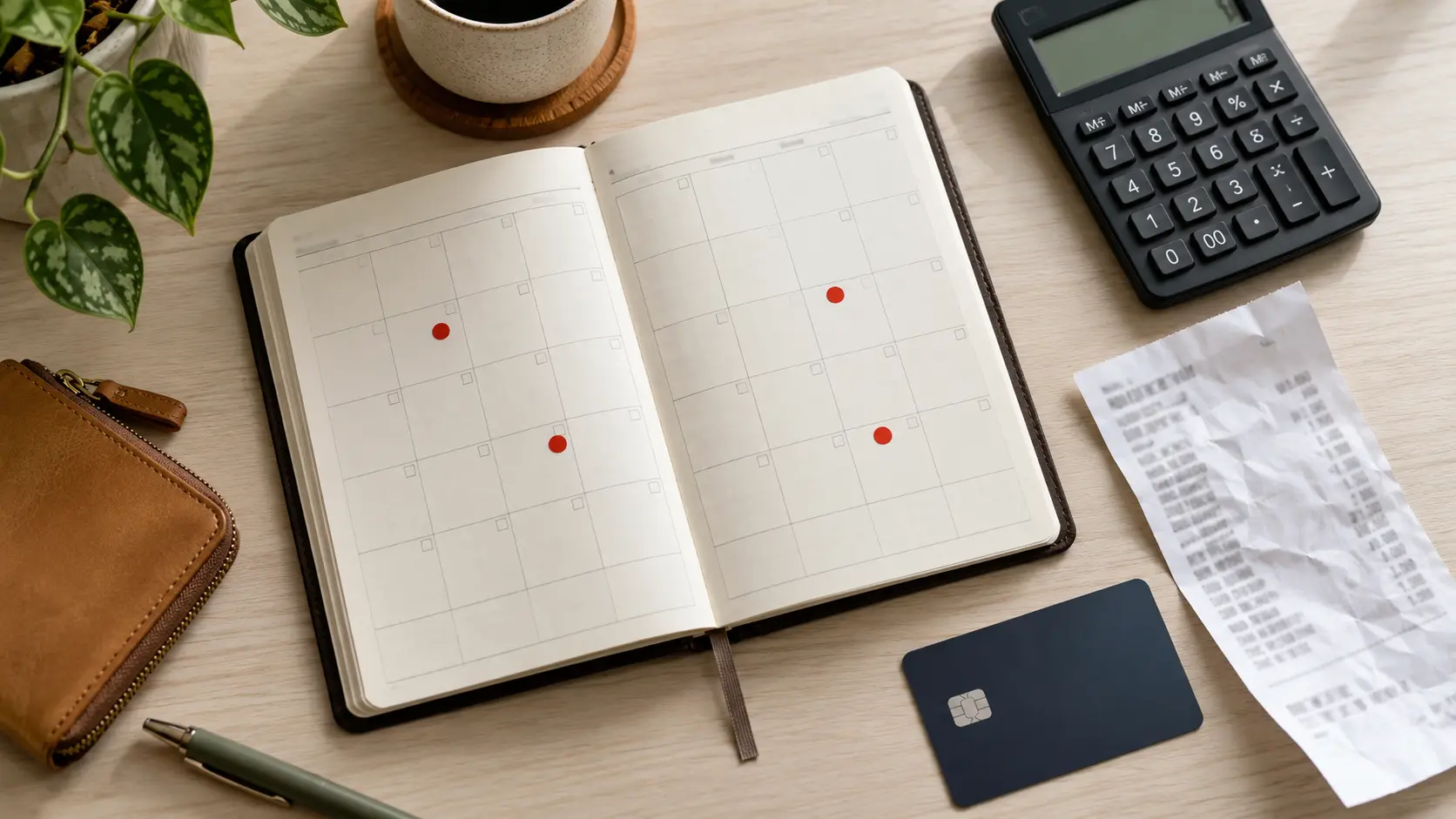
Build one calendar with three columns: date, money arriving, and money leaving. Put rent, food, transport, utilities and existing debt payments on it before the proposed purchase. Then follow the running balance day by day until the last installment is paid. A positive month-end balance can conceal a shortfall in the middle.
Our guide to money available after the bills can help you distinguish a bank balance from money you have already committed.
Ask what happens when the plan stops going smoothly
Read the agreement for late fees, interest, changes to promotional terms and credit reporting. The CFPB warns that missed payments can lead to account restrictions, collection activity and potential credit consequences. Do not assume every provider treats missed payments identically, or that a product without a hard credit inquiry cannot affect your credit later.
For Canadian plans paid by pre-authorized debit, FCAC notes that a failed collection can create fees from the provider and the financial institution. Where a credit card is used, consider that card’s terms too. Financing a payment does not erase it; it moves the obligation elsewhere.
- What exactly is charged if a payment fails?
- Can payment dates change, and is there a fee?
- Which party handles a dispute?
- Where can you see the current remaining balance?
A return needs a second check
Sending a parcel back and having a loan adjusted are separate events to track. Before buying, find out what the merchant and lender require for a return. Keep the tracking receipt, return approval and correspondence together. Follow the payment agreement until the provider confirms an adjustment or gives clear instructions; do not guess that the next collection has disappeared.
Add a reminder to check the account after the expected refund date. Record what has actually been credited and what remains scheduled. If the numbers disagree, raise the issue through the provider’s official support channel with the order and return references.
Set a limit before the checkout screen suggests one
A lender’s approval is not a household spending plan. Decide what amount you can commit after essential bills and a realistic cushion. If another installment requires you to rely on an uncertain bonus, a refund that has not arrived or a new loan, pause and compare alternatives such as waiting or choosing a less expensive item.
If an existing payment looks unaffordable, contact the provider before the due date to ask about available options and their costs. Keep a written record. For expenses that recur each year, saving for irregular bills gives you a way to prepare before the next shopping season.
Does interest-free mean cost-free?
Not necessarily. An agreement can charge fees even where its advertised interest rate is zero. Compare the total you would pay under the actual terms, and check what changes if you pay late.
Sources & further reading
- CFPB: How BNPL loans work
- CFPB: Missed BNPL payments
- FCAC: Buy now, pay later plans
- FTC: Questions before using BNPL
Sources checked October 4, 2026. Rules, coverage and product terms can change.
General education for US and Canadian readers, not personal financial advice. Product terms and consumer protections vary by provider and jurisdiction.