The useful part, up front
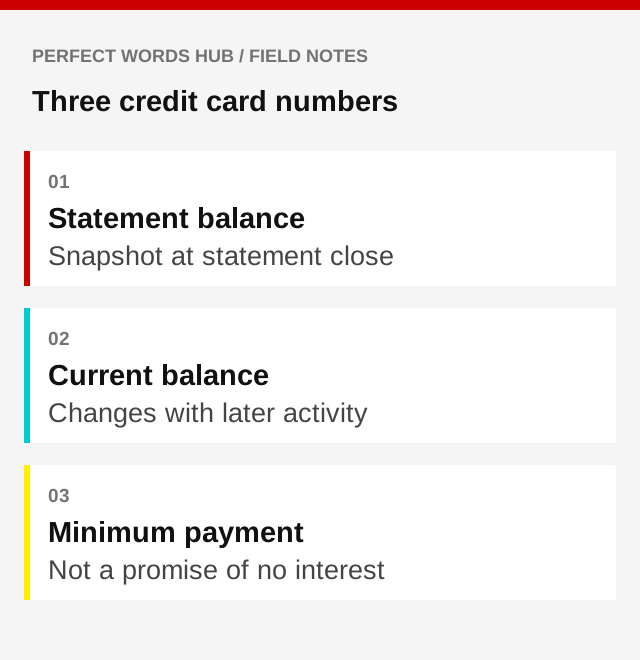
- The statement balance is tied to a completed billing cycle.
- The current balance changes as new transactions post.
- Paying the minimum does not usually mean avoiding purchase interest.
Start with the billing cycle
A credit card statement is a report for a defined period. Its closing date marks the end of that period; its payment due date comes later. Your app may show activity from both sides of that dividing line at once, which is why the displayed numbers do not always match.
Before deciding what to pay, open the actual statement. Note the statement balance, minimum due, due date, and interest charges. Then check the card agreement for the rules that apply to purchases, cash advances, and promotional balances.
Read the numbers as separate labels
| Number | Question it helps answer |
|---|---|
| Statement balance | What was owed when this billing cycle closed? |
| Current balance | What has posted to the account as of now? |
| Minimum payment | What is the required minimum for this statement? |
In a simplified example, a statement closes at $640. You later make a $90 purchase and no other transactions post. The current balance becomes $730, while that statement still reports $640. A payment, refund, fee, or other adjustment would change the picture.
The minimum is not a declaration that the rest is cost-free. It is a payment threshold. Carrying the remaining balance can generate interest, and a repayment path built around minimums may take much longer than expected.
Check whether a grace period applies
Many cards offer a purchase grace period. Under the applicable terms, paying the full statement balance by its due date can avoid purchase interest. But cards are not required to offer that benefit, and carrying a balance can cause it to be lost. Cash advances commonly follow different rules.
If you recently carried debt, do not assume a single payoff instantly resets everything. Ask the issuer how interest is calculated, whether residual interest may appear, and what restores the purchase grace period. Read a promotional offer’s end date and conditions separately.
Match autopay to your intention
Autopay for the minimum, statement balance, and a fixed amount are different instructions. Look at the actual setting instead of relying on the word “autopay.” Check that the funding account can cover the scheduled debit and that you understand how manual payments affect it.
A reminder before the due date gives you time to notice a failed payment or an unusually large statement. Confirmation that a payment was scheduled is not always confirmation that it cleared.
When the numbers do not look right
Compare posted transactions with receipts and check for payments or refunds that are still pending. If something remains unclear, contact the issuer through its official app or the number printed on the card. Ask about that specific statement and keep a record of the explanation.
If you cannot make the required payment, contact the issuer promptly about available options. This guide explains the labels; it does not choose a repayment strategy for your situation.
Sources & further reading
- CFPB: Credit card key terms (opens in a new tab)
- CFPB: Credit card grace periods (opens in a new tab)
- CFPB: How card interest is calculated (opens in a new tab)
Source links checked September 30, 2026. Requirements and guidance may change.
For general education in a U.S. context. This is not financial, insurance, legal, tax, or medical advice. Examples are illustrative. Check current rules and relevant policy documents, and seek qualified help for your circumstances.
How well do you read your money?
Put the ideas into practice with 10 questions and explanations.
Take the quiz