The useful part, up front
- A credit report and a credit score are different things.
- Check account details against your own records.
- Describe a suspected error precisely and save the response.
Begin with the document you are reviewing
A credit report contains information about your credit history; a score is a number calculated from information using a scoring model. Reading the report helps you investigate the underlying details instead of trying to interpret every movement in a score.
Obtain reports through an official route identified by the CFPB or USAGov. Record the reporting company and the report date. Keep the downloaded copy secure because it contains sensitive personal information. Avoid uploading an unredacted report to a public forum for help.
Check identity details before balances
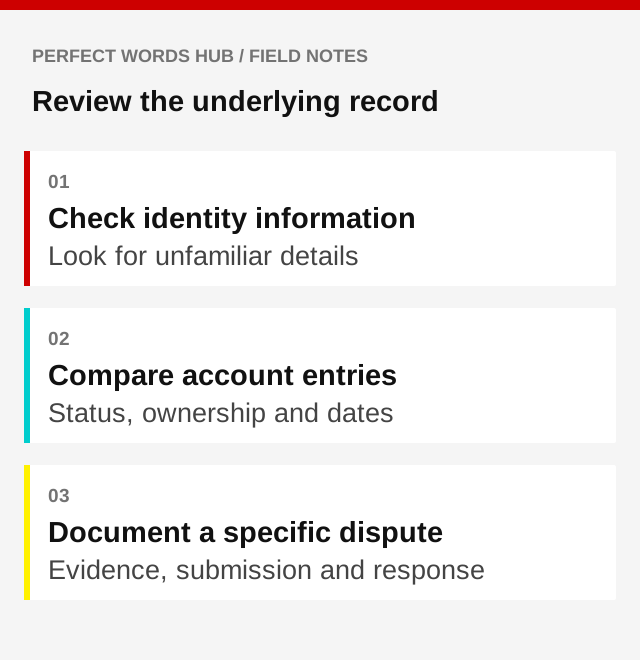
Start with names, addresses, and other identifying information. An unfamiliar entry may need investigation, but a former address alone does not prove identity theft. Write down the exact entry and why it appears incorrect rather than jumping to a conclusion.
Then look for accounts you do not recognize or information that appears to belong to another person. If you suspect identity theft, use the official recovery resources linked by the CFPB. A routine correction and identity-theft response may require different actions.
Review one account from top to bottom
For each account, compare the reported ownership, status, balance, payment information, and dates with your own documents. The CFPB identifies errors such as incorrect late-payment reporting, mistaken ownership, and closed accounts shown as open.
Use a working table with columns for the reported detail, your concern, and the supporting document. This keeps a disagreement specific. A statement showing a payment date can help explain an issue more clearly than a general assertion that a score is too low.
Make a dispute easy to understand
If you identify inaccurate information, follow the official dispute process with the credit reporting company and the company that supplied the information. Explain what you believe is wrong, why, and what correction you are requesting. Retain copies of submissions and supporting evidence.
Keep originals when a copy will serve the process, and use the correct secure submission channel. Read current instructions for documentation and time limits. This guide does not determine whether a particular entry must be removed.
Track the outcome instead of restarting the story
Save acknowledgments, reference numbers, and the investigation result with the original report. Compare the response with the exact point you raised. If the result leaves a question unresolved, consult the CFPB’s guidance about next steps.
Set a reminder to review the relevant report again when appropriate. Do not pay someone solely because they promise to erase accurate negative information. The useful objective is an accurate record, not a guaranteed score change or lending decision.
Questions worth checking
Is an unfamiliar name always a fraudulent account?
No. A creditor may report under a name you do not immediately recognize, and a genuinely incorrect entry is also possible. Investigate through trusted records and official contact channels before deciding what happened. Do not contact an unexpected caller simply because they claim to explain the entry.
Will correcting an error guarantee a higher score?
No particular score or lending outcome is guaranteed. The effect depends on the corrected information, scoring model, and other factors. Frame the request around the inaccurate detail and supporting evidence rather than a promised number of points.
Sources & further reading
- CFPB: Common credit-report errors (opens in a new tab)
- USAGov: Disputing credit-report errors (opens in a new tab)
Source links checked September 30, 2026. Requirements and guidance may change.
For general education in a U.S. context. This is not financial, insurance, legal, tax, or medical advice. Examples are illustrative. Check current rules and relevant policy documents, and seek qualified help for your circumstances.
How well do you read your money?
Put the ideas into practice with 10 questions and explanations.
Take the quiz