
The useful part, up front
- Withholding and estimated payments are payments toward tax.
- A year-end total does not answer every timing question.
- Use current instructions and your actual income mix.
Separate the payment from the calculation
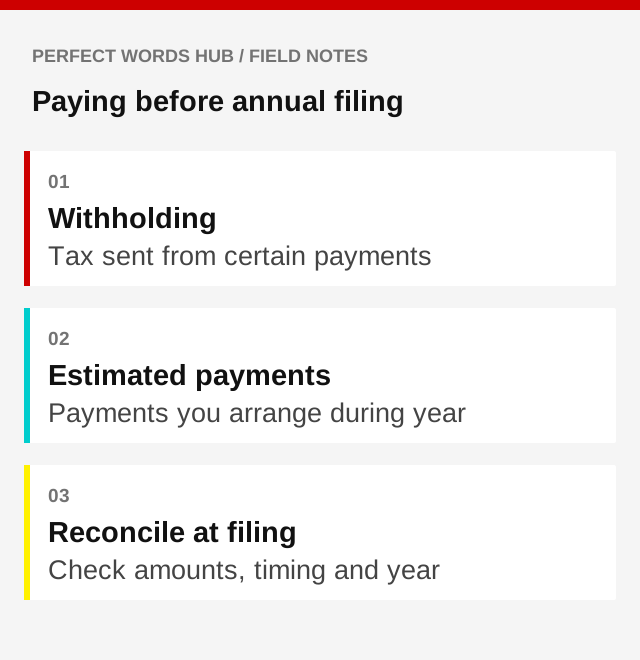
Federal income tax generally operates on a pay-as-you-go basis. Withholding sends part of certain payments, such as wages, toward tax. Estimated payments are another route for paying during the year when withholding does not cover the relevant obligation.
Neither route is itself the same as a deduction that reduces taxable income. Your return combines the tax calculation and payments under the applicable rules. Read the deduction and credit guide if those stages are getting mixed together.
List how income reaches you
Start a worksheet with each source of income, whether tax is withheld, and where its supporting records are kept. A paycheck, freelance payment, and investment distribution may arrive with different tax treatment and documentation. Do not assume that a payment platform handles your tax obligation for you.
This list is preparation for a calculation, not the calculation itself. A household’s filing situation, credits, other taxes, and current-year rules can all matter. The IRS estimated-tax instructions explain who may need to pay and describe exceptions.
Treat timing as a separate question
Estimated-tax payment periods have specific due dates; they are not simply any four dates you choose. Underpayment or late payment can lead to a penalty even when the final return shows a refund. Check current IRS guidance for the relevant year and circumstances.
If income changes during the year, revisit the estimate. Uneven income can require a more careful approach than dividing one annual figure into four equal pieces. A qualified tax professional can help determine whether a different permitted calculation applies.
Consider all payments in the same picture
Some wage earners can address additional tax needs through increased withholding, depending on their situation. The IRS withholding resources and current forms can help evaluate that option. Do not change a form using an unrelated person’s example.
Keep an internal record of amounts already withheld and estimated payments actually made. Distinguish a planned transfer from a completed payment. When reviewing an account or confirmation, check that the payment is associated with the intended taxpayer, tax type, and year.
Save a record someone else can follow
Keep payment confirmations alongside the calculation that led to them. Record the date, amount, tax year, and source of funds without exposing full account details in an unsecured file. At filing time, reconcile those records with the relevant statements and account information.
Federal guidance does not settle state or local payment requirements. Check those separately. This article explains the two payment routes; it does not calculate your liability, prescribe a withholding amount, or promise that a particular schedule avoids penalties.
Questions worth checking
Does setting money aside count as paying estimated tax?
No. Money reserved in your own account has not reached the taxing authority. Reserving funds and making a correctly designated payment are separate actions. Keep a confirmation of the completed payment and check its tax year and type.
Can last year’s payment amount simply be repeated?
Last year’s return may help with a current calculation, but changed income, household circumstances, or tax rules can alter the result. Use the current instructions, including any applicable exceptions, rather than assuming an old dollar amount is automatically sufficient.
Sources & further reading
- IRS: Estimated-tax rules and payment periods (opens in a new tab)
- IRS: Tax withholding (opens in a new tab)
- IRS: Tax Withholding and Estimated Tax, Publication 505 (opens in a new tab)
Source links checked September 30, 2026. Requirements and guidance may change.
For general education in a U.S. context. This is not financial, insurance, legal, tax, or medical advice. Examples are illustrative. Check current rules and relevant policy documents, and seek qualified help for your circumstances.
Do these tax terms add up?
Put the ideas into practice with 15 questions and explanations.
Take the quiz