
The useful part, up front
- Use the move-in record as a reference, not a memory test.
- Document cleaning, condition, and return of access items.
- Check your jurisdiction’s deposit procedures and deadlines.
Read the move-out process early
Before the final moving day, review the lease and local tenant guidance for notice, inspections, cleaning obligations, and return of keys or other access devices. Ask which arrangements must be booked in advance. Do not infer a legal deadline from a general article written for another state.
Keep deposit receipts and the original agreement available. A fee, prepaid rent, and security deposit may have different legal treatment. Accurate labels make it easier to ask for the right information if a disagreement develops.
Revisit the original condition record
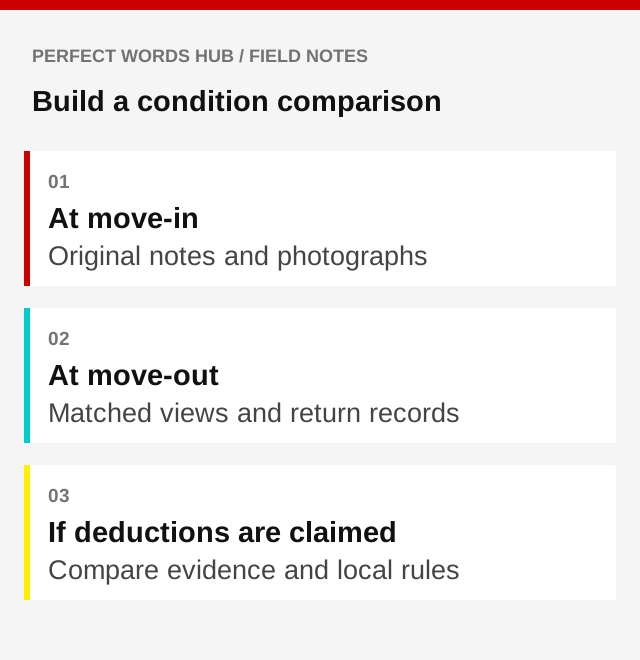
Open your move-in photographs and notes before taking the final set. Use similar viewpoints where practical: a room-wide image to establish location, then a close view of the detail. Photograph after belongings and cleaning supplies are removed if possible.
Keep original files and descriptive notes. Do not edit away damage or rely only on a filtered image. The point is a truthful comparison. If a condition changed during the tenancy, keep relevant repair reports and communications with that part of the record.
Document what you completed
Retain receipts for work or cleaning you arranged and note what each receipt actually covers. A receipt shows a transaction; it does not by itself establish that every obligation was met or that a charge is legally permitted.
Record the date and method of returning keys, fobs, parking passes, or other access items. Request or keep available confirmation. Where a forwarding address or other information is required, follow the applicable process and save evidence of providing it.
Read an itemization one line at a time
If deductions are claimed, compare each description with the lease, local rules, move-in evidence, move-out evidence, and repair history. Ask for clarification of an unclear amount or condition. Separate factual questions from legal ones: what happened, what was charged, and whether that charge is allowed are distinct issues.
Avoid assuming that every mark is chargeable damage or that every cleaning charge is invalid. Rules about ordinary wear, deductions, itemization, and timing vary. A local tenant resource can help apply them to the actual facts.
Build a concise dispute file if needed
Organize the agreement, payment evidence, condition comparison, correspondence, and itemization chronologically. A short list of disputed entries is easier for a housing counselor or legal adviser to review than an unorganized photo dump.
Check local response options and deadlines promptly. Documentation can support your position but cannot guarantee recovery of money. The move-in record guide explains how to establish a clear starting point for your next tenancy.
Questions worth checking
Should I photograph only damaged areas?
Include clear overall views as well as relevant details. A close image alone may not show where the condition is located. A balanced, truthful record can also show areas left in good condition, while the original move-in record supplies the comparison.
What if I no longer have the original checklist?
Look for copies in saved email, downloaded portal records, or files shared at move-in. Other dated evidence may help establish facts, but do not recreate a document and present it as an original. Explain any gaps honestly when seeking local help.
Sources & further reading
- USAGov: Find applicable tenant-rights resources (opens in a new tab)
- CFPB: Rental obligations and legal protections (opens in a new tab)
Source links checked September 30, 2026. Requirements and guidance may change.
For general education in a U.S. context. This is not financial, insurance, legal, tax, or medical advice. Examples are illustrative. Check current rules and relevant policy documents, and seek qualified help for your circumstances.
Would your rental paperwork help you?
Put the ideas into practice with 11 questions and explanations.
Take the quiz