The useful part, up front
- Report immediate dangers through an appropriate urgent channel.
- Keep dated requests, photos, responses, and access arrangements.
- Get local guidance before withholding rent or paying for repairs yourself.
Identify what needs to happen first
A dripping tap and a suspected gas leak should not go into the same queue. If the situation may be an immediate danger, move to safety and contact the appropriate emergency service or utility. Routine documentation can follow when it is safe.
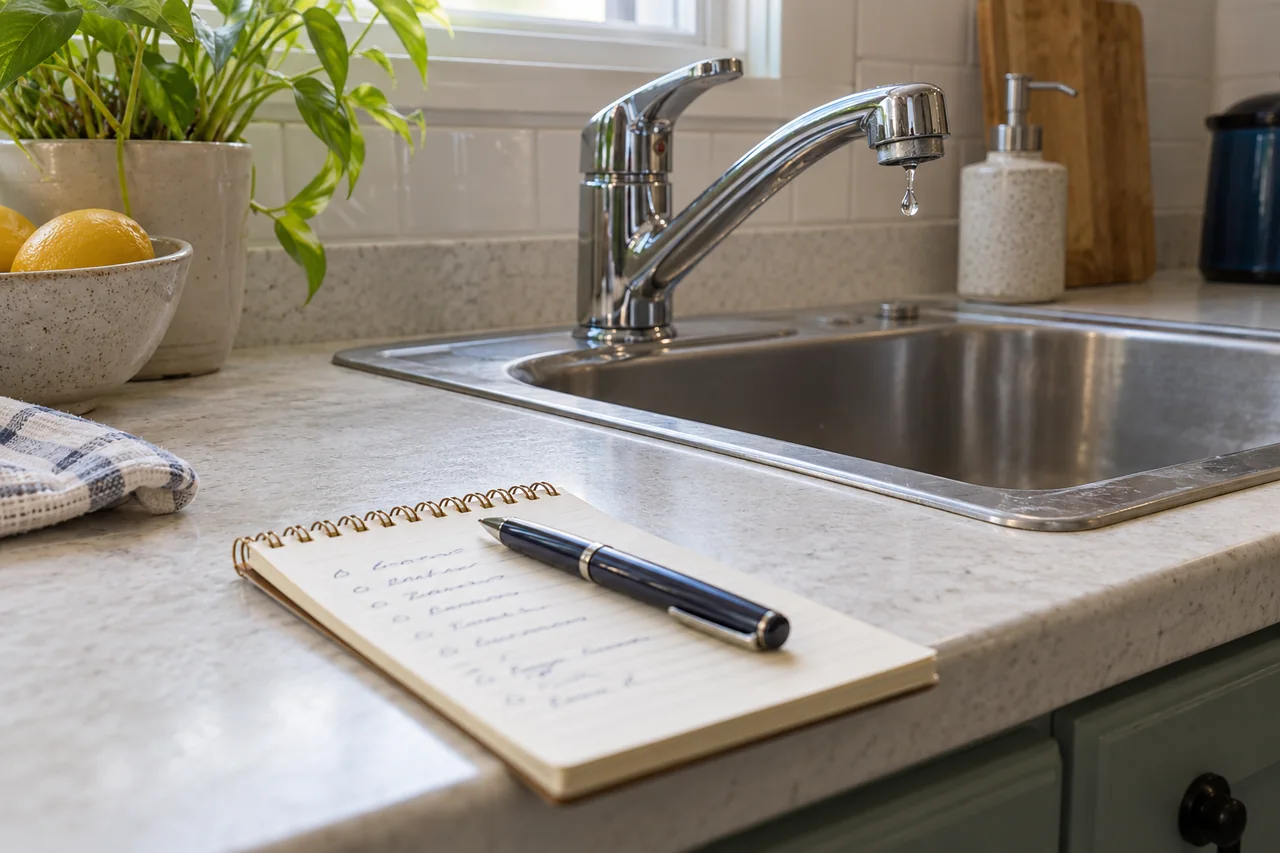
For a non-emergency repair, describe the observable problem instead of guessing its cause. “Water appears beneath the sink after it runs” gives a maintenance worker more useful information than an unsupported diagnosis of the plumbing.
Make a timeline that someone else can follow
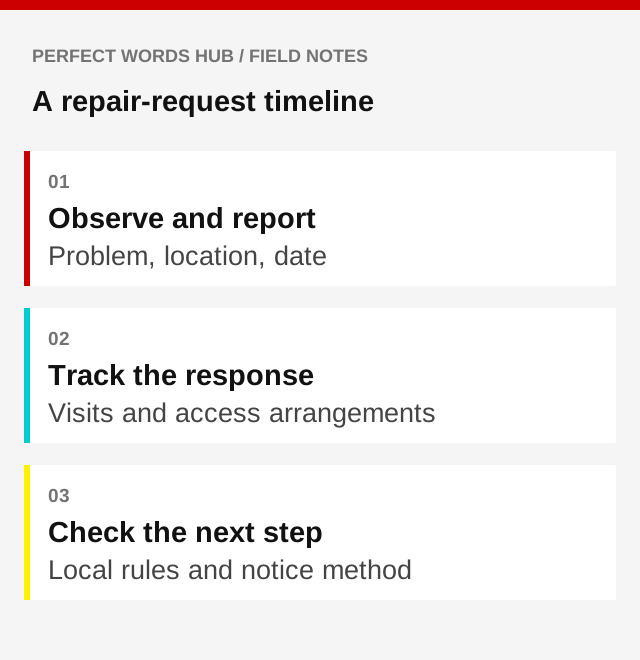
Write down when you first noticed the issue, when you reported it, which channel you used, and what response arrived. Keep copies of photos, messages, work orders, and agreed access arrangements. A compact timeline reduces the chance that a later conversation skips an important event.
| Record | Useful detail |
|---|---|
| Initial report | Date, problem, location, recipient |
| Response | What was promised and by whom |
| Visit or attempted visit | Date, access arrangement, work performed |
| Follow-up | What remains unresolved, with current evidence |
Keep the wording factual. A saved accusation rarely helps as much as a clear description of what still does not work.
Check the notice process
Read the lease and consult the applicable state or local tenant resource. A maintenance portal may be convenient, but a formal legal notice can have separate requirements. There is no single response deadline that this general article can apply to every U.S. rental.
If you follow up, reference the earlier report and include any change in conditions. Ask for the next step and how access will be arranged. Retain a copy of the message and any delivery evidence available through the method you used.
Understand the risk of acting on a general tip
Rent withholding, repair-and-deduct procedures, and ending a lease early can carry serious consequences if their local conditions are not met. An online story about someone else’s dispute does not establish your rights. Get jurisdiction-specific legal guidance before taking those steps.
Also avoid assuming that a landlord’s silence gives permission to alter the property. Preserve relevant evidence and records of reasonable safety measures, but distinguish them from decisions that create expenses or affect contractual obligations.
Find help that matches the property
USAGov links to state tenant-rights resources and legal-aid information. Local housing or code-enforcement agencies may be relevant to some conditions. HUD has channels for certain properties it insures or manages; that does not make HUD the complaint office for every private rental.
Bring your lease and timeline when seeking help. Ask which rules apply to the location and housing type, what deadlines matter, and how notices must be delivered. This guide helps organize that conversation; it does not decide whether a particular landlord has violated the law.
Sources & further reading
- USAGov: Complaints about a landlord (opens in a new tab)
- USAGov: Eviction and legal-help resources (opens in a new tab)
- CFPB: Tenant and debt-collection rights (opens in a new tab)
Source links checked September 30, 2026. Requirements and guidance may change.
For general education in a U.S. context. This is not financial, insurance, legal, tax, or medical advice. Examples are illustrative. Check current rules and relevant policy documents, and seek qualified help for your circumstances.
Would your rental paperwork help you?
Put the ideas into practice with 11 questions and explanations.
Take the quiz