The useful part, up front
- Personal-property and liability coverage serve different purposes.
- Read limits, exclusions, valuation terms, and who is insured.
- Do not assume a landlord’s policy protects your belongings.
Separate the building from your belongings
A landlord’s property insurance generally protects the owner’s interests in the building. It is not a substitute for your own protection for clothing, electronics, furniture, and other possessions. A lease may require renters insurance, but meeting a lease requirement does not establish that every risk you care about is covered.
Begin with a home inventory. Think about the practical cost of replacing many ordinary items together, not only the price of the most expensive device.
Ask which coverage would respond
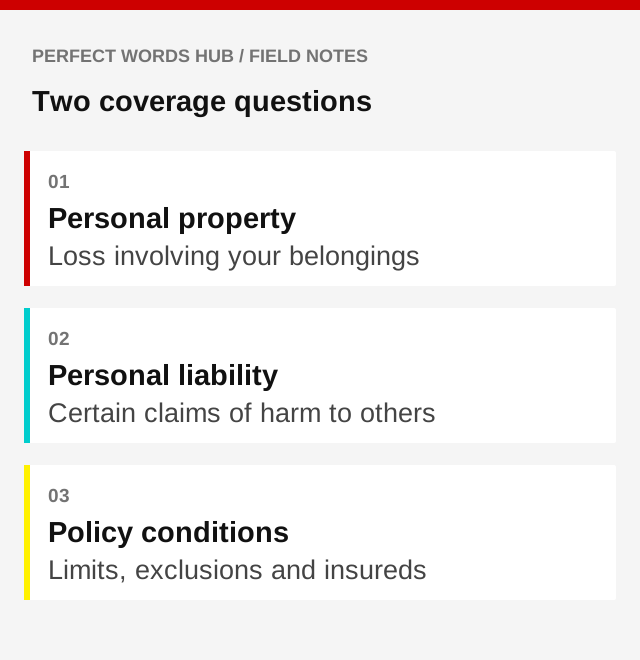
Personal-property coverage concerns insured belongings after a covered loss. Personal-liability coverage addresses certain claims that you are responsible for injury to another person or damage to their property. These sections have their own conditions and limits.
Imagine two hypothetical events: your belongings are stolen, and a visitor alleges that your actions caused an injury. They raise different policy questions. Neither example promises coverage; the cause of loss, facts, insured person, and wording still matter.
Read the limits inside the limit
A large overall property limit can coexist with smaller limits for particular items or types of loss. Ask how jewelry, work equipment, bicycles, or other important possessions are treated. Also check whether the settlement basis considers depreciation or has replacement conditions.
Make a short comparison sheet: relevant item or risk, applicable limit, deductible if any, exclusion, and unanswered question. A premium-only comparison can miss the provision that matters most to your household.
Check household and living-arrangement details
Do not assume every roommate is insured under one person’s policy. Ask who qualifies as an insured and whether the arrangement accurately reflects the people living there. Tell the insurer about circumstances that could affect coverage, such as business use or a change of address.
Some policies include additional living-expense coverage after a covered event makes the home uninhabitable. Ask what triggers it, what expenses qualify, and what limits or time conditions apply. It is not a general fund for any inconvenient move.
Turn uncertainty into a precise question
Instead of asking whether a policy is good, ask how it handles a specific situation you want to understand. Request the relevant wording or written clarification. Keep that response with the policy so you can find it later.
For a disagreement or a product-specific question, contact the insurer, a licensed professional, or your state insurance department. Understanding the coverage categories helps you ask better questions; it does not determine whether a future claim will be paid.
Questions worth checking
If the lease requires insurance, is the minimum enough?
A lease requirement tells you what the landlord requests, subject to applicable law. It does not measure all of your possessions or potential exposures. Compare the actual policy with your own inventory and questions, and consult a licensed professional about appropriate protection.
Does a receipt guarantee reimbursement?
A receipt supports ownership or cost, but a claim still depends on coverage, valuation, limits, deductibles, and other conditions. Keep receipts as evidence without treating them as a promise that the original purchase price will be paid.
Sources & further reading
- NAIC: Renters coverage basics (opens in a new tab)
- NAIC: Understanding policy language (opens in a new tab)
Source links checked September 30, 2026. Requirements and guidance may change.
For general education in a U.S. context. This is not financial, insurance, legal, tax, or medical advice. Examples are illustrative. Check current rules and relevant policy documents, and seek qualified help for your circumstances.
Can you read between the policy lines?
Put the ideas into practice with 12 questions and explanations.
Take the quiz