
The useful part, up front
- Find out which costs are already included in the quoted payment.
- Plan separately for expenses that do not pass through the mortgage account.
- An affordability estimate is sensitive to property-specific assumptions.
Ask what the quoted figure includes
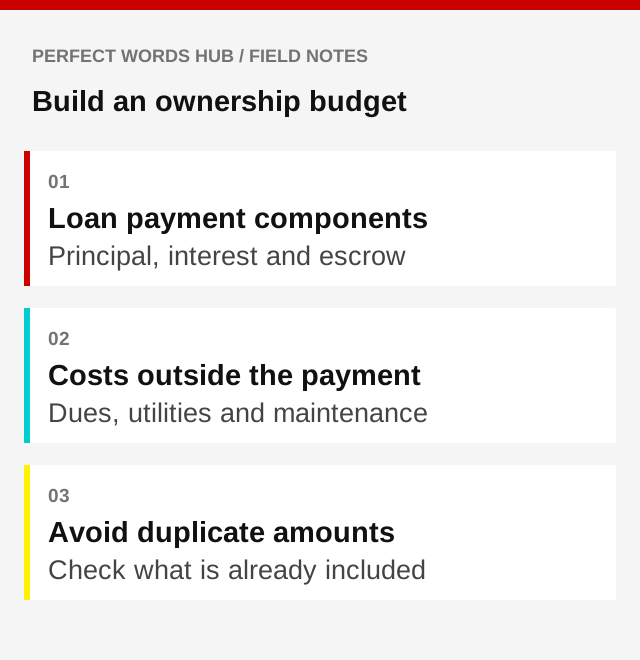
A mortgage calculator may lead with principal and interest: repayment of the amount borrowed and the cost of borrowing. The amount actually billed can also include escrow payments for property taxes and homeowners insurance, and sometimes mortgage insurance.
Read the labels before adding numbers. If a quoted total already includes taxes and insurance, adding them again overstates the estimate. If it excludes them, treating that total as the full monthly housing cost understates it.
Build a property-specific list
Use records and quotes relevant to the property rather than a national average alone. Association dues, utilities, insurance availability, and maintenance needs can vary substantially. Ask whether there are known assessments or upcoming projects, without assuming a past bill predicts the next one.
| Cost group | Examples to check |
|---|---|
| Loan and escrow | Principal, interest, property taxes, required insurance |
| Other recurring bills | Association dues, utilities, services |
| Irregular costs | Repairs, maintenance, replacements, assessments |
| Upfront costs | Down payment, closing costs, moving and setup |
The list is a prompt to investigate, not a statement that each item applies to every buyer.
Keep repairs out of the wishful-thinking column
A home does not schedule every repair neatly across twelve months. A water heater can fail early, and a roof may have a different remaining life than the listing suggests. An inspection can help identify questions, but it cannot promise that nothing will break.
Instead of assigning a universal maintenance percentage, list the systems and conditions you actually know about. Seek appropriate estimates for major concerns and decide how much uncertainty the household can absorb. Keep planned improvements separate from essential repairs.
Stress the assumptions, not just the payment
Test what happens if income falls temporarily or a recurring cost rises. Even when principal and interest are fixed, taxes or insurance can change. Adjustable-rate loan terms introduce additional considerations described in the loan documents.
Include other household commitments in the exercise. A lender’s approval reflects its underwriting process; it does not know every personal priority or future expense that affects your comfort with the payment.
Use the loan documents as a cross-check
The Loan Estimate and Closing Disclosure organize key loan terms and costs. Compare them carefully and ask the lender about differences you do not understand. Separate cash needed at closing from monthly costs so a one-time amount does not disappear into a recurring estimate.
A qualified housing counselor, lender, or other relevant professional can help explain the documents. This budget framework is educational and does not determine what you can afford to borrow.
Sources & further reading
- CFPB: Understanding the Loan Estimate (opens in a new tab)
- CFPB: Home affordability considerations (opens in a new tab)
- CFPB: Understanding the Closing Disclosure (opens in a new tab)
Source links checked September 30, 2026. Requirements and guidance may change.
For general education in a U.S. context. This is not financial, insurance, legal, tax, or medical advice. Examples are illustrative. Check current rules and relevant policy documents, and seek qualified help for your circumstances.
Are you seeing the whole homebuying picture?
Put the ideas into practice with 14 questions and explanations.
Take the quiz