
The useful part, up front
- An appraisal addresses estimated property value.
- An inspection examines condition within its agreed scope.
- Read limitations and contract deadlines before deciding what to do next.
Give each report its own job
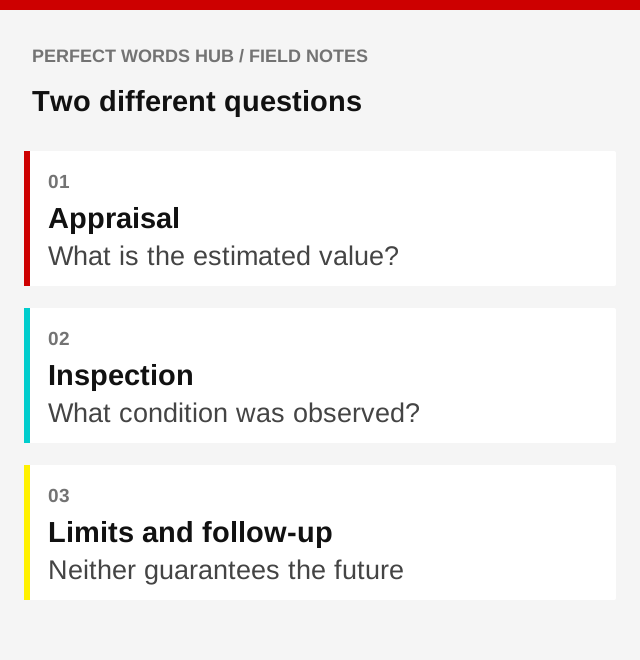
A home purchase produces a stack of documents that can look equally official. Two of them address different questions. An appraisal estimates value for its stated purpose, often as part of a lender’s process. A home inspection examines condition and can identify issues that deserve further investigation.
An appraiser may observe some conditions, but that does not turn the appraisal into a complete inspection. Likewise, an inspection report does not tell you that the agreed purchase price is fair or that a lender will approve the loan.
Read the scope before the conclusion
An inspection has limits. Ask what is included, what is excluded, which areas were inaccessible, and whether a specialist is needed for a particular concern. A general inspection may not answer every question about pests, environmental conditions, or concealed systems.
A sentence saying an area could not be inspected is not the same as a finding that it is in good condition. Keep a list of unresolved questions and discuss them while there is still time under the purchase contract to act.
Turn observations into follow-up questions
Instead of sorting every finding into “good house” or “bad house,” ask what the observation means. Is the issue a safety concern, a maintenance item, or something requiring specialist evaluation? What further information would make the uncertainty smaller?
Example: “Signs of moisture near a window” is an observation. The cause, extent, remedy, and cost may need further investigation. An unsupported repair estimate is not a substitute for that investigation.
When practical, ask the inspector to explain unfamiliar terms in the report. Keep written answers with the original document.
Treat valuation questions separately
If an appraisal differs from the agreed price, ask the lender how that affects the loan process and what review options exist. The next steps depend on the contract, loan terms, evidence, and applicable rules. Neither buyer nor seller is automatically required to adopt a particular negotiation outcome because of a general online article.
Read the appraisal’s stated assumptions and property details. If you believe there is a factual error, ask about the proper process for raising it with supporting information.
Watch the calendar
Inspection and financing contingencies can include deadlines and specific notice requirements. A useful report that arrives after a contractual deadline may leave you with fewer options. Ask your agent or attorney which dates and procedures apply to your transaction.
Keep the appraisal, inspection, specialist findings, estimates, and related correspondence distinguishable. Each adds a different piece of information. Together they support better questions, but none guarantees a trouble-free purchase or future resale value.
Sources & further reading
- CFPB: Scheduling a home inspection (opens in a new tab)
- CFPB: Different property valuations (opens in a new tab)
- CFPB: Mortgage terms (opens in a new tab)
Source links checked September 30, 2026. Requirements and guidance may change.
For general education in a U.S. context. This is not financial, insurance, legal, tax, or medical advice. Examples are illustrative. Check current rules and relevant policy documents, and seek qualified help for your circumstances.
Are you seeing the whole homebuying picture?
Put the ideas into practice with 14 questions and explanations.
Take the quiz