
The useful part, up front
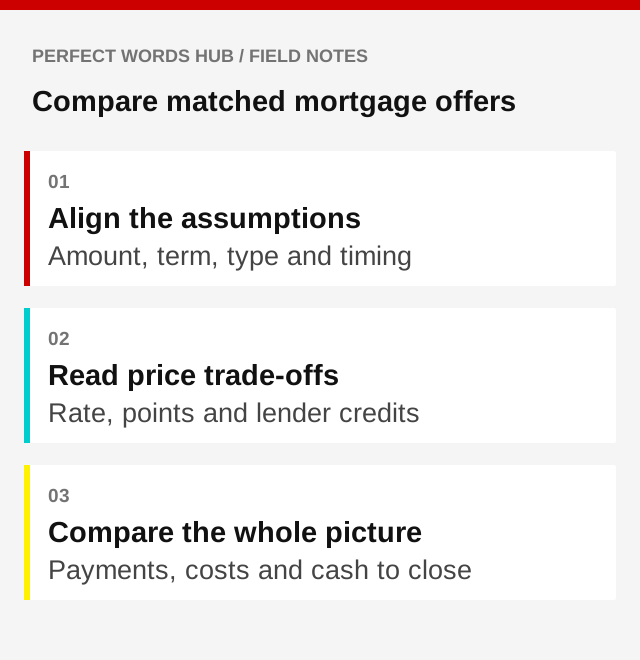
- Align loan amount, term, type, and quote timing.
- Compare points and lender credits alongside the rate.
- Read payment components and cash to close separately.
Check that the offers describe the same loan
Before comparing prices, confirm the loan amount, loan term, loan type, and whether the rate is fixed or adjustable. Review the property and borrower assumptions. Differences here can make a price comparison misleading even when the documents have the same format.
Also note when each estimate was issued and whether the interest rate is locked. Market conditions and lock terms can change the comparison. Ask the lender to explain differences rather than trying to normalize an unfamiliar loan feature yourself.
Read the rate with the upfront charges
Discount points can exchange an upfront cost for a lower rate; lender credits can offset certain upfront costs and may involve a higher rate. Compare the actual terms offered. Neither feature is automatically best for every borrower.
In a deliberately simplified example, $1,800 extra upfront for $30 lower monthly principal and interest has an arithmetic break-even point of 60 months. That shortcut omits other differences, time value, tax effects, and future changes. It is a question to investigate, not a loan recommendation.
Break the monthly payment into components
Read principal and interest separately from mortgage insurance, escrow, and other estimated costs. Check whether a listed payment can change. A fixed interest rate does not freeze property taxes, insurance, or every ownership expense.
Use the ownership-cost guide to add costs outside the loan payment without counting the same item twice. An estimate can be useful and still depend on assumptions that deserve confirmation.
Distinguish closing costs from cash to close
Closing costs describe transaction costs; estimated cash to close reflects a broader calculation that can include the down payment and adjustments for deposits or credits. Read the relevant sections rather than treating the two labels as synonyms.
Separate lender charges from third-party services and other estimates. Ask which services you can shop for and which figures may change under applicable rules. A single grand total can hide the reason two offers differ.
Keep questions attached to the chosen estimate
Write down each unresolved item, the lender’s response, and any revised document. Compare the later Closing Disclosure with the relevant Loan Estimate and ask about differences before closing. Do not assume that a revised number is either automatically wrong or automatically acceptable.
The CFPB’s interactive explanations help identify each section. This article teaches comparison habits, not eligibility or suitability for a particular mortgage. A housing counselor or qualified professional can help assess your actual situation.
Questions worth checking
Is the lowest monthly payment necessarily the cheapest loan?
No. A longer term or different product can reduce the payment while changing total interest and risk. Compare matched terms, upfront charges, payment components, and relevant long-term costs. An affordable monthly amount is only one part of evaluating the offer.
Can I compare quotes issued on different days?
You can review them, but timing and rate-lock differences may explain part of the gap. Ask lenders about comparable current terms and note when each figure was available. Do not assume an older quoted rate remains obtainable.
Sources & further reading
- CFPB: Loan Estimate explainer (opens in a new tab)
- CFPB: Closing Disclosure explainer (opens in a new tab)
- CFPB: Mortgage terms (opens in a new tab)
Source links checked September 30, 2026. Requirements and guidance may change.
For general education in a U.S. context. This is not financial, insurance, legal, tax, or medical advice. Examples are illustrative. Check current rules and relevant policy documents, and seek qualified help for your circumstances.
Are you seeing the whole homebuying picture?
Put the ideas into practice with 14 questions and explanations.
Take the quiz