
The useful part, up front
- Premiums are paid to maintain coverage, even in months without care.
- Expected care costs belong alongside the annual premium.
- An out-of-pocket maximum does not include every possible expense.
Separate the membership cost from the care cost
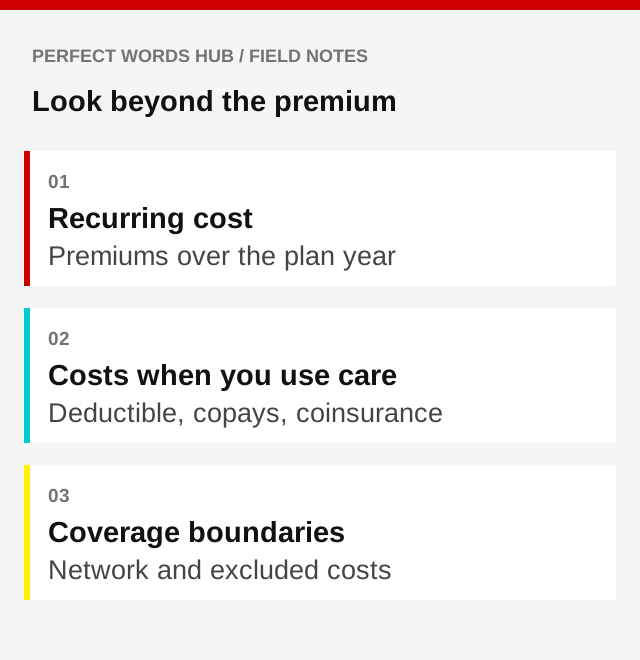
A monthly premium is the recurring amount paid to keep a health plan active. It is easy to compare because it appears near the top of a quote. But care may bring deductibles, copayments, and coinsurance as well. A lower recurring price can accompany higher costs when you use services.
Start with the annual premium for the period you are comparing. If a figure reflects an employer contribution or a subsidy, check that you are comparing the amount you would actually pay and that the eligibility assumptions are correct.
Build a scenario rather than a prediction
Consider an invented comparison between two plans. Assume the estimates below already account for the relevant covered, in-network cost sharing. They are not current market prices or a recommendation.
| Illustrative amount | Plan A | Plan B |
|---|---|---|
| Monthly premium | $220 | $310 |
| Annual premium | $2,640 | $3,720 |
| Estimated yearly care costs paid by you | $2,100 | $900 |
| Illustrative combined cost | $4,740 | $4,620 |
In this single scenario, B costs $120 less overall despite its higher premium. Another pattern of care could reverse the result. Do not add the deductible a second time if it is already included in your care-cost estimate.
Understand what the limit limits
For covered in-network benefits, the plan’s out-of-pocket maximum limits qualifying cost sharing during the plan year. Premiums, noncovered services, and many out-of-network expenses do not count toward it. A plan’s limit therefore is not an absolute ceiling on all your health-related spending.
Check whether the plan has separate medical and prescription deductibles, and how individual and family limits work. Compare annual premiums plus the applicable out-of-pocket maximum as one stress scenario for covered in-network care, while keeping excluded costs separate.
Read the summary with actual needs in mind
The Summary of Benefits and Coverage presents major plan features in a standardized format. Use it to locate deductibles, common service charges, and exclusions. Its illustrative coverage examples help explain structure; they are not a personalized bill estimate.
List the services and medications you expect to use, then check the full plan documents where the summary is not specific enough. A lower estimate has little value if a necessary service is not covered or the provider is outside the applicable network.
Leave room for uncertainty
No comparison can know exactly what care the coming year will bring. Try a lower-use and a higher-use scenario and note which assumptions drive the difference. Also ask whether you could handle a large bill early in the year before reserves have built up.
Confirm details with the plan and seek qualified enrollment help when needed. This is an explanation of insurance costs, not medical advice or a determination of which plan is right for you.
Sources & further reading
- HealthCare.gov: Total yearly costs (opens in a new tab)
- HealthCare.gov: Out-of-pocket maximum (opens in a new tab)
- HealthCare.gov: Summary of Benefits and Coverage (opens in a new tab)
Source links checked September 30, 2026. Requirements and guidance may change.
For general education in a U.S. context. This is not financial, insurance, legal, tax, or medical advice. Examples are illustrative. Check current rules and relevant policy documents, and seek qualified help for your circumstances.
Could you spot the cost that’s missing?
Put the ideas into practice with 13 questions and explanations.
Take the quiz