
The useful part, up front
- An EOB explains claim processing; it is not a payment request.
- Match patient, provider, service date, and claim details.
- Investigate differences before assuming either document is correct.
Identify who sent the document
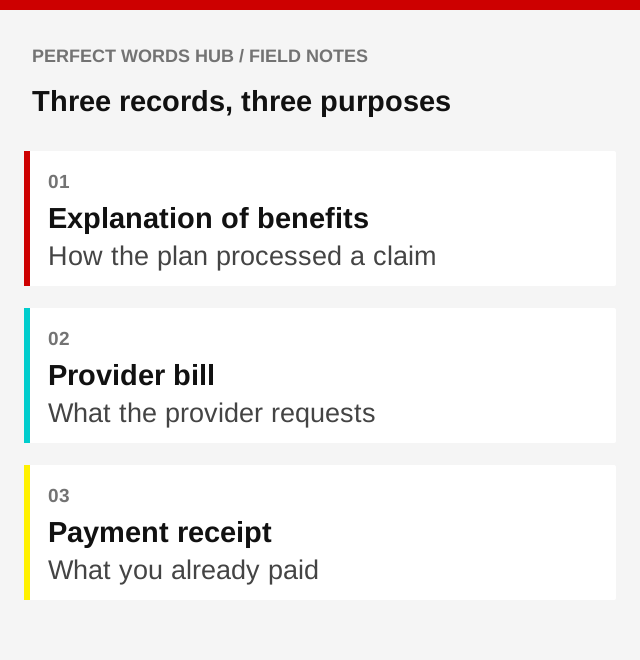
An explanation of benefits, often called an EOB, comes from a health plan and describes how it processed a claim. A provider bill asks for payment. The EOB may show an amount described as your responsibility, but the document itself is not the bill.
Keep both documents. A payment receipt is a third record with a different purpose: it shows money already paid. Putting these records together makes it easier to avoid overlooking a copayment collected at the appointment.
Match the service before comparing the dollars
Check the patient, provider, service date, and claim or account reference. One visit can produce separate claims from different participants, so a similar date does not necessarily mean two documents duplicate the same charge.
If you cannot identify a service, ask for clarification through the provider’s or insurer’s known contact channel. Avoid sending full medical or member information in an insecure public message. Keep a note of the reference number used during the conversation.
Read the amounts as a sequence
Look for the provider’s charge, any allowed amount or adjustment, the plan’s payment, and the stated patient responsibility. Definitions and presentation vary. An adjustment is not automatically money you paid, and the original charge is not always the amount you owe.
In an invented example, a document might show a $200 charge, a $120 allowed amount, an $80 adjustment, a $90 plan payment, and $30 patient responsibility. These figures illustrate different labels; they are not a promise of coverage or a model for every claim.
Investigate a mismatch with a focused question
Compare the provider bill with the processed claim and your receipts. If the amounts differ, ask whether the claim is still pending, was corrected, or needs additional information. Request an itemized explanation when necessary. Do not assume every mismatch is fraud or ignore a bill because an EOB is confusing.
For example: “This bill lists $60 due for the same service, while the EOB lists $30 and my receipt shows $20 paid. Can you explain the remaining balance?” Keep the answer and any corrected document.
Separate billing questions from appeal questions
A clerical error may need a corrected claim, while a coverage denial may require an appeal. Read the explanation and relevant deadlines. Ask the plan which process applies and whether a billing hold is available while the matter is reviewed; do not assume one is automatic.
Use the denial response guide for organizing an appeal question. Plan type and circumstances affect rights and procedures, so consult the official resources relevant to your coverage.
Questions worth checking
Should I pay the amount printed on the EOB immediately?
An EOB is not a bill. Match it with the provider’s actual request and payments already made, and clarify inconsistencies promptly. Do not ignore a provider deadline while waiting; ask the billing office how the account is being handled.
Can one appointment produce several EOBs?
Yes, separate providers or services can generate separate claims. Compare identifiers and the service description instead of assuming that every document with the same date is a duplicate. Ask about an unfamiliar claim through a trusted contact channel.
Sources & further reading
- CMS: How to read an explanation of benefits (opens in a new tab)
- HealthCare.gov: Appealing an insurance decision (opens in a new tab)
Source links checked September 30, 2026. Requirements and guidance may change.
For general education in a U.S. context. This is not financial, insurance, legal, tax, or medical advice. Examples are illustrative. Check current rules and relevant policy documents, and seek qualified help for your circumstances.
Could you spot the cost that’s missing?
Put the ideas into practice with 13 questions and explanations.
Take the quiz