
The useful part, up front
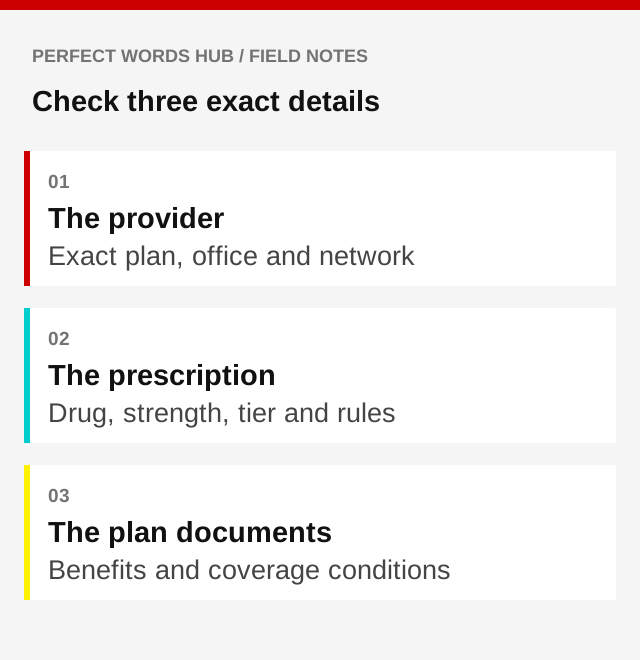
- Verify the exact plan and network, not just the insurer.
- Check medication details in the plan’s current drug list.
- Save the answers and confirm important details before scheduled care.
Use the plan’s full identity
One insurer may offer several networks and plan designs in the same area. “We accept that insurance” can therefore be an incomplete answer. Write down the exact plan name, network, coverage year, and any identifying number available on the plan materials.
When checking a provider directory, search for the specific professional and location. A practice with several offices may not have identical arrangements everywhere. Contact both the plan and the provider’s office when an important detail remains uncertain.
Ask about the whole visit
A visit can involve more than one organization. The clinician, facility, laboratory, imaging provider, or other service may be billed separately. Before scheduled care, ask which providers are involved and what network or authorization questions need answering.
This checklist is not a reason to delay emergency care. Emergency billing protections and exceptions have their own rules. For a planned appointment, however, a few specific questions can make the cost explanation much clearer.
Look up the prescription precisely
Plans publish a list of covered drugs, often called a formulary. Look for the exact medication, strength, and form. A drug’s tier, preferred pharmacy arrangements, quantity limits, prior-authorization requirements, or other conditions can affect access and cost.
Do not change or stop a medicine because of a coverage search. Ask your prescribing clinician and the plan about medically appropriate options and the process for any coverage review. Clinical decisions and insurance administration are connected, but they are not the same task.
Read the rules behind the plan type
Labels such as HMO and PPO describe broad patterns, not every detail. Some designs generally restrict non-emergency coverage to a network; others may offer out-of-network benefits at a higher cost. Referral and prior-authorization requirements still need to be checked in the specific documents.
Keep these separate: a referral concerns the route to another provider. Prior authorization is a plan’s approval process for certain services or drugs. Neither phrase, by itself, tells you your final bill or guarantees payment under every circumstance.
Keep a short verification record
Record when you checked, the exact plan, the person or resource that answered, and any reference number supplied. Save relevant documents with the coverage year visible. Recheck important details before scheduled care because directories and arrangements can change.
A useful final list has three columns: confirmed, still unclear, and whom to ask. This keeps an assumption from quietly turning into a fact. If the answer affects access to care or a substantial cost, ask the plan for a written explanation and available assistance.
Sources & further reading
- HealthCare.gov: Plan and network types (opens in a new tab)
- HealthCare.gov: Comparing plans and covered drugs (opens in a new tab)
- HealthCare.gov: Summary of Benefits and Coverage (opens in a new tab)
Source links checked September 30, 2026. Requirements and guidance may change.
For general education in a U.S. context. This is not financial, insurance, legal, tax, or medical advice. Examples are illustrative. Check current rules and relevant policy documents, and seek qualified help for your circumstances.
Could you spot the cost that’s missing?
Put the ideas into practice with 13 questions and explanations.
Take the quiz